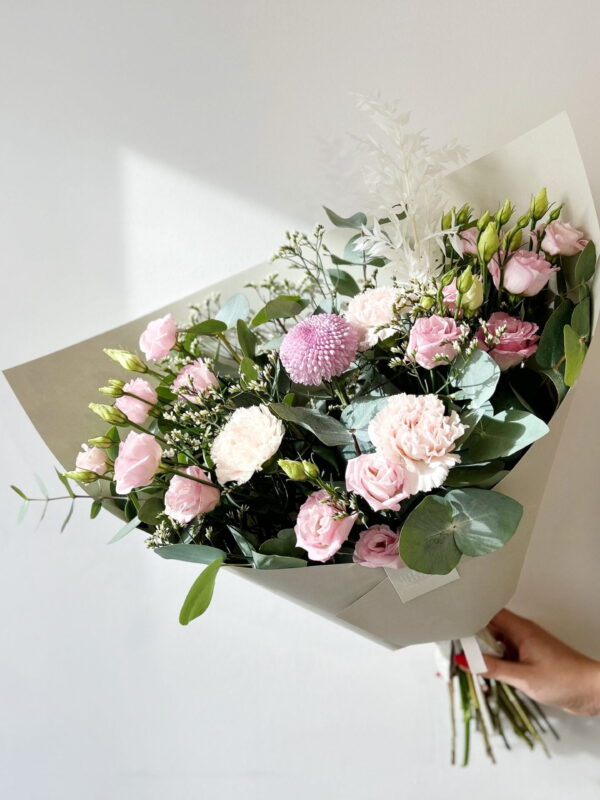
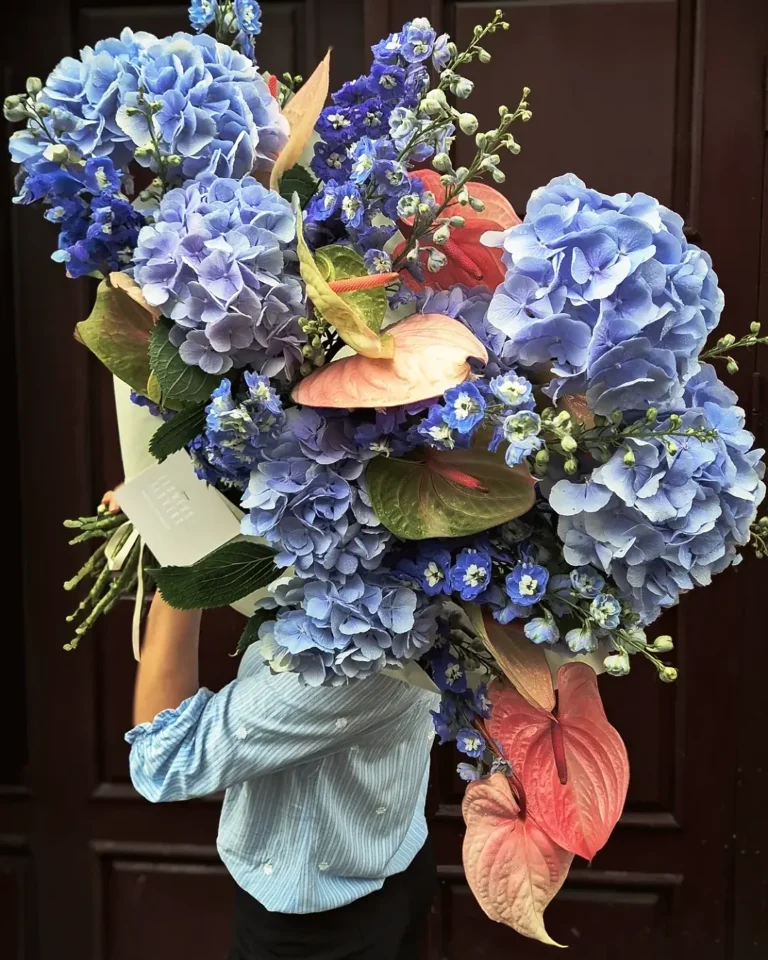
A well-cared-for bouquet lasts 7–14 days in a vase, while a neglected one can wilt within a few days. The difference comes not from complicated tricks but from a few simple rules: a clean vase, fresh water, correctly cut stems and a cool spot. Here are our florists’ 10 tips for making cut flowers last longer, care by flower and the most common myths.
10 tips for making cut flowers last longer
1. Start with a clean vase
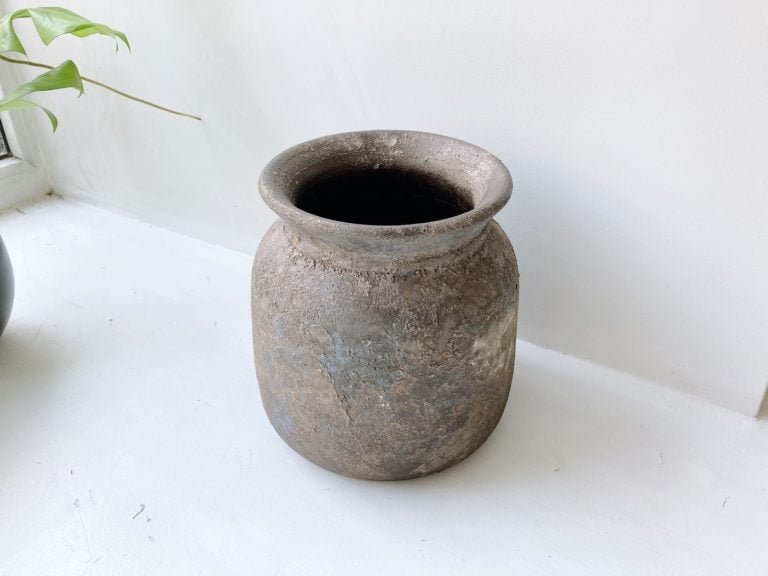
Before putting in a bouquet, wash the vase with hot water and washing-up liquid. Bacteria left on the walls are the most common reason flowers wilt quickly. How to choose the right vase is covered in our vase guide.
2. Trim the stems
Before putting the flowers in water, cut 2–3 cm off the stems with a sharp knife or secateurs. Cut hard, woody stems at an angle to increase the surface that takes up water; soft stems can also be cut straight. Blunt scissors crush the stem, so it drinks less.
3. Remove the lower leaves
Leaves that end up in the water start to rot and foul it. Keep only those that stay above the water.
4. Use the right amount of water
For most flowers, fill the vase halfway with cool water. Thirsty roses and hydrangeas need more, while gerberas, whose stems rot quickly, need only 5–7 cm.
5. Use flower food
The sachet of flower food that comes with your bouquet is not a marketing extra. It contains sugar that feeds the flowers and substances that slow the growth of bacteria. Dissolve it in as much water as the packet says.
6. Change the water every 2–3 days
Each time, rinse the vase, add fresh water with flower food and trim the stems by 1–2 cm. If the water turns cloudy sooner, change it straight away.
7. Keep the bouquet cool
The cooler it is, the longer flowers last. Avoid direct sun, radiators, lamps, the TV and draughts. It is worth moving the bouquet to the coolest room overnight.
8. Keep it away from fruit
Ripening fruit, especially bananas and apples, releases ethylene – a gas that makes flowers age faster and drop their petals. Carnations are especially sensitive to ethylene.
9. Remove wilted flowers and leaves
Wilting flowers encourage bacteria and speed up the ageing of the rest. Remove them as soon as you notice them – the bouquet will look neat and last longer.
10. Only mist flowers that benefit from it
A fine mist refreshes hydrangeas and greenery, which absorb moisture through their flowers and leaves. For most other flowers – roses, peonies, gerberas – misting does not help, and drops left on the petals can cause spots and rot.
Care by flower
Every flower has its own quirks. Here is a short summary, with more detail in our individual guides.
| Flower | Vase life | Key tip |
|---|---|---|
| Roses | 7–10 days | They drink a lot – check the water level daily |
| Peonies | 5–8 days | Buds open faster in lukewarm water |
| Hydrangeas | 5–10 days | A 30–60 min bath revives wilted heads |
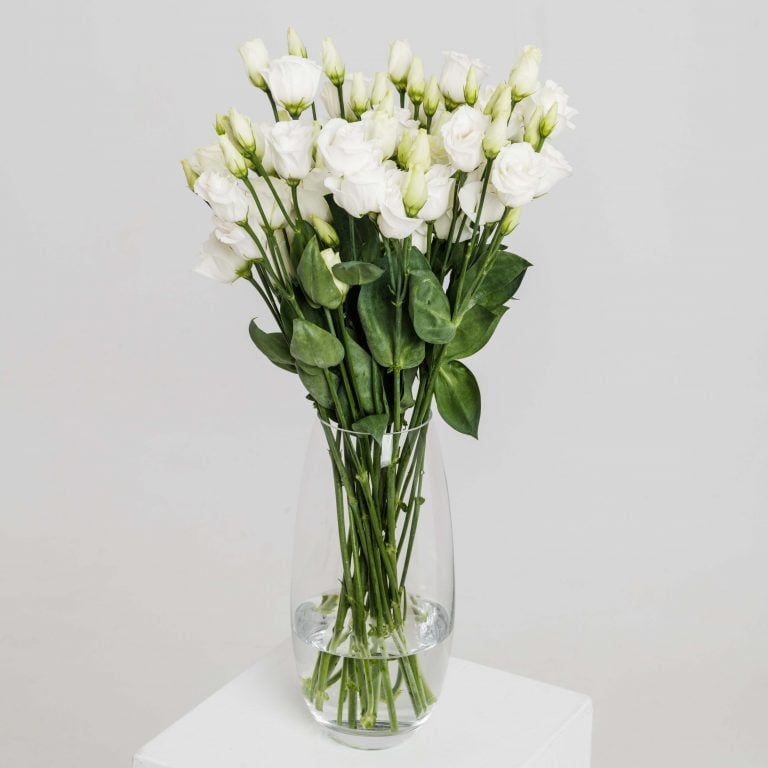
| Lisianthus | 10–14 days | Remove faded flowers so the buds open |
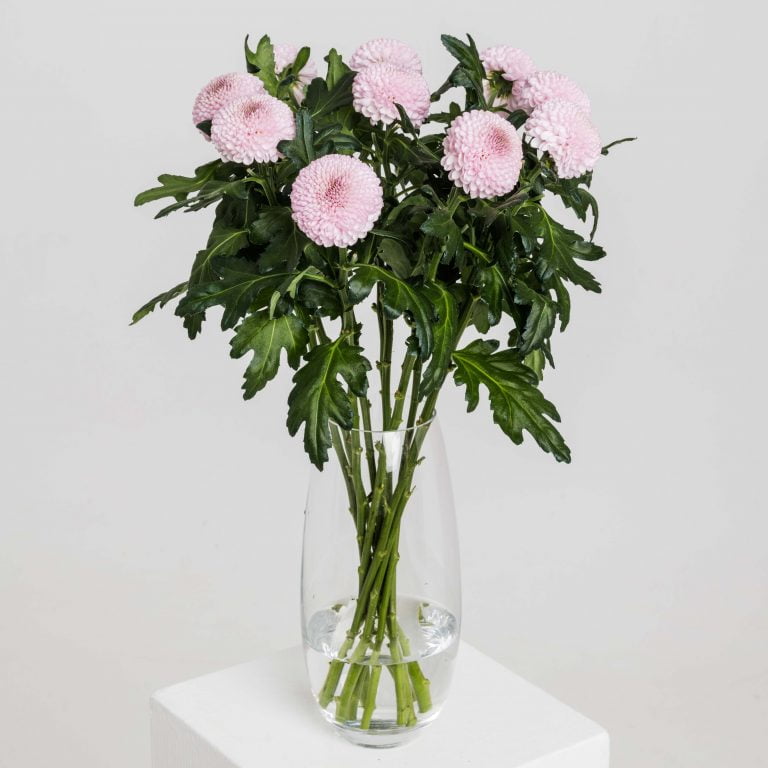
| Chrysanthemums | 2–3 weeks | Remove all leaves that would touch the water |
| Carnations | 10–14 days | Keep them away from fruit |
| Gypsophila | 1–2 weeks | It can be dried afterwards |
| Gerberas | 7–14 days | 5–7 cm of water is enough |
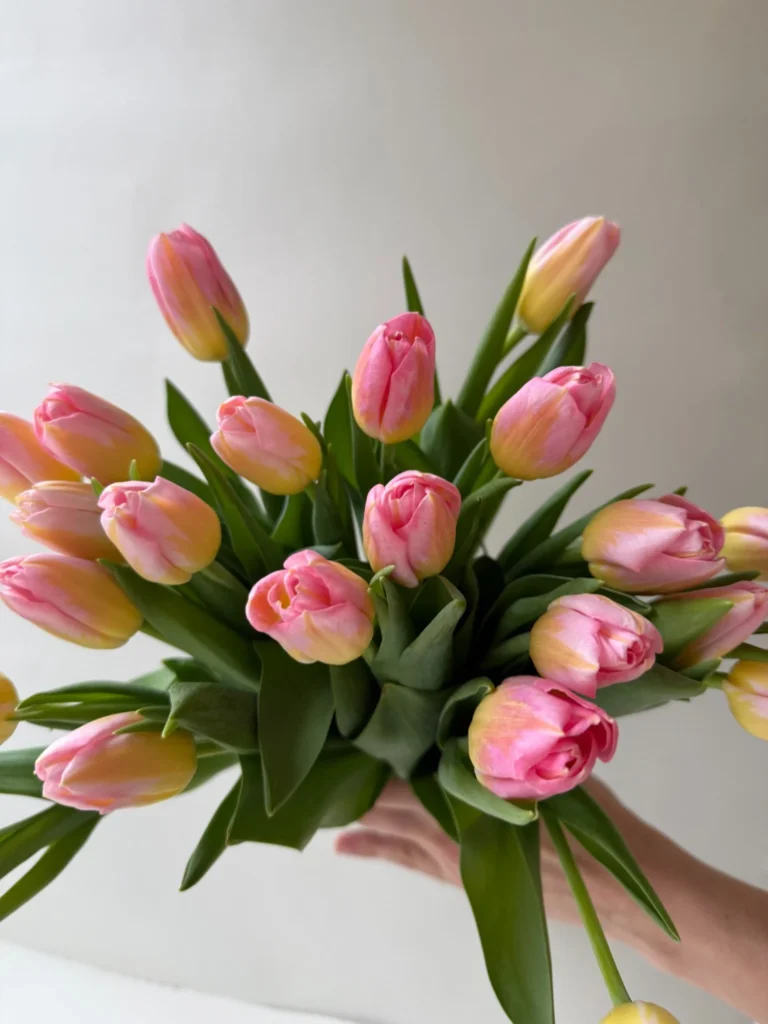
| Tulips | 5–7 days | They keep growing in the vase – trim the stems |
Tulips: how to stop them bending
Tulips keep growing even in a vase – within a few days they can grow several centimetres and bend towards the light. Put them in a tall vase with cool water, turn the vase slightly every day and do not mix them with freshly cut daffodils: their sap harms other flowers. In spring you will find tulip bouquets in our catalogue.
Myths about caring for cut flowers
- “Add an aspirin to the water.” Aspirin slightly acidifies the water, but flower food works much better: it contains both food for the flowers and antibacterial substances.
- “A copper coin in the vase keeps bacteria away.” Modern coins contain too little copper to make a difference. A clean vase and frequent water changes matter far more.
- “Sugar replaces flower food.” Sugar alone feeds not only the flowers but also bacteria, so the water clouds faster. If you have no flower food, change the water more often instead.
- “Crush the stems with a hammer.” Crushing damages the vessels that carry water. Cut the stem at an angle with a sharp knife instead.
- “The more water, the better.” Deep water harms gerberas and calla lilies – their stems rot. Use the right amount for each flower.
- “Flowers should go into ice-cold water.” Most flowers drink cool water best, while lukewarm water helps buds, such as peonies, open faster.
When a bouquet starts to fade
Not all flowers fade at the same time. Pick out the wilted ones, trim the remaining stems and put them in a smaller vase – you will get a new arrangement. Some flowers, such as gypsophila, hydrangeas or eucalyptus, dry beautifully and can become a decorative feature.
Want fresh flowers at home all the time? Try our flower subscription – a new bouquet arrives regularly, and we deliver in Vilnius and across Lithuania.
Frequently asked questions about flower care
How long does a bouquet last?
Usually 7–14 days, depending on the flowers and the care. Chrysanthemums, carnations and lisianthus last longest, peonies and tulips the shortest.
How often should you change a bouquet’s water?
Every 2–3 days, or straight away if the water turns cloudy. Trim the stems and rinse the vase each time.
Do you need flower food?
Yes. It contains sugar for the flowers and substances that slow bacteria, so the bouquet lasts longer.
Why did my bouquet wilt so quickly?
The most common reasons are a dirty vase, water that is rarely changed, a warm spot or fruit nearby. Flowers can often be revived: trim the stems under water and put them in fresh, cool water.
Can you keep flowers in the fridge?
Florists keep flowers in special 3–5 °C cold rooms, but a household fridge often contains fruit that releases ethylene. It is better to move the bouquet to the coolest room overnight.