Carnations are among the hardiest cut flowers: properly cared for, they last two and sometimes three weeks in a vase. Florists value them for their sturdy stems, wide range of colours and gentle, spicy scent. In Lithuania carnations were long associated with official Soviet-era celebrations, but contemporary floristry has rediscovered them: pastel, spray and bicoloured carnations now grace both wedding and everyday bouquets.
In this guide: what the different carnation colours mean, which types there are, how to care for them and what they pair with best in a bouquet.
What carnation colours mean
Carnation symbolism took shape in Victorian England, when flowers were used to send messages. Today these meanings are more inspiration than strict rules, but they help you choose a shade for the occasion:
- Red – love, admiration and respect. Deep red, burgundy carnations traditionally stand for deep feelings.
- White – purity, luck and faithfulness. They suit weddings and christenings, and with greenery also a sympathy bouquet.
- Pink – gratitude and a mother’s love; the pink carnation is the one most often associated with Mother’s Day.
- Yellow – in the old language of flowers they meant disappointment, but today yellow carnations are given as a symbol of joy and warmth.
- Purple and bicoloured – originality and playfulness; in a bouquet they act as a bold accent.
Another custom is alive in Lithuania: when giving a few flowers, an odd number is given to the living, while even numbers are reserved for funerals. In large bouquets with greenery nobody counts the flowers.
Types of carnations: standard, spray and garden pinks
Bouquets use varieties of the carnation (lat. Dianthus caryophyllus). The genus has about 300 species, but florists mostly work with two types:
- Standard carnations – one large flower, about 5–7 cm across, on a sturdy stem. They suit single-variety bouquets and tall arrangements.
- Spray carnations – 3–5 smaller flowers and buds on one stem that open gradually. In a bouquet they fill gaps and add lightness.
Garden pinks – sweet William (Dianthus barbatus), the garden pink (D. plumarius) or the maiden pink (D. deltoides) – belong to the same genus but are rarely used in cut bouquets: their stems are shorter and the flowers small.
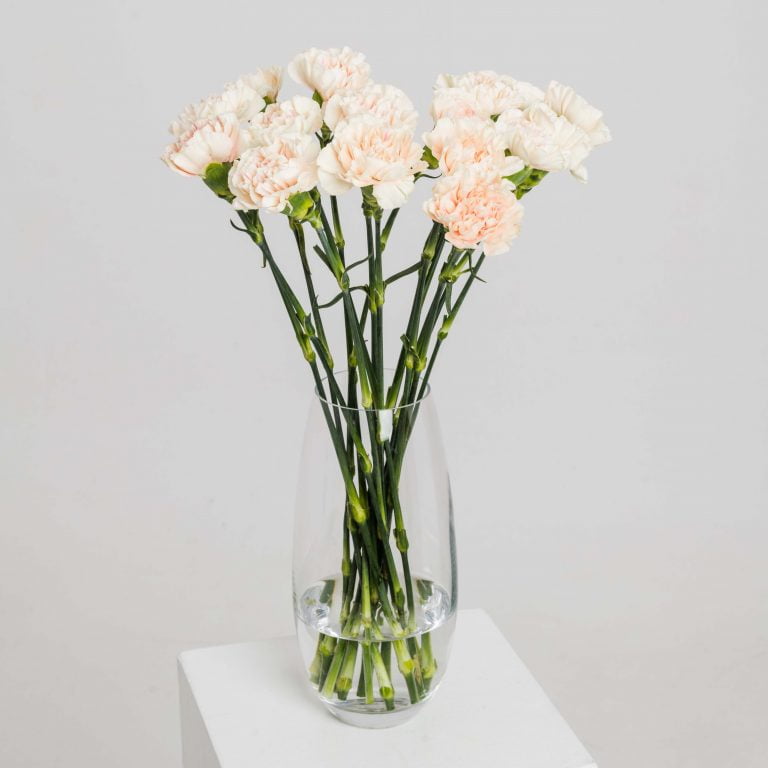
Carnation names in Lithuanian, English and Latin
| Lithuanian | English | Latin |
|---|---|---|
| Daržinis gvazdikas | Carnation | Dianthus caryophyllus |
| Šakotasis (kekinis) gvazdikas | Spray carnation | Dianthus caryophyllus |
| Barzdotasis gvazdikas | Sweet William | Dianthus barbatus |
| Plunksninis gvazdikas | Garden pink | Dianthus plumarius |
The Lithuanian name comes from the Polish goździk, “little nail”: the word was used both for the spice cloves and for the flower, whose blooms smell similar. The Greek genus name Dianthus translates as “flower of the gods”.
How long carnations last in a vase and how to care for them
Carnations usually last 10–14 days in a vase, and up to three weeks in a cool room with regular water changes. To get there:
- Cut the stems at an angle, 2–3 cm, with a sharp knife. Carnation stems have nodes (swellings) – cut between them, as water rises less well through a node.
- Remove the lower leaves so they do not sit in the water – bacteria multiply in them quickly.
- Place in a clean vase with cool water and add flower food if it came with your bouquet.
- Change the water every two days, trimming the stems by about 1 cm each time.
- Keep them away from fruit. Carnations are very sensitive to ethylene, released by apples, bananas and other ripening fruit: it makes the flowers close and wilt within a few days.
- Avoid heat and draughts – a radiator or direct sun shortens the life of the bouquet.
Remove faded flowers from spray carnations so the remaining buds can open. More general tips in our flower care guide.
What carnations pair with in a bouquet
Carnations keep their shape, so in a bouquet they “hold” lighter flowers. Our florists most often combine them with:
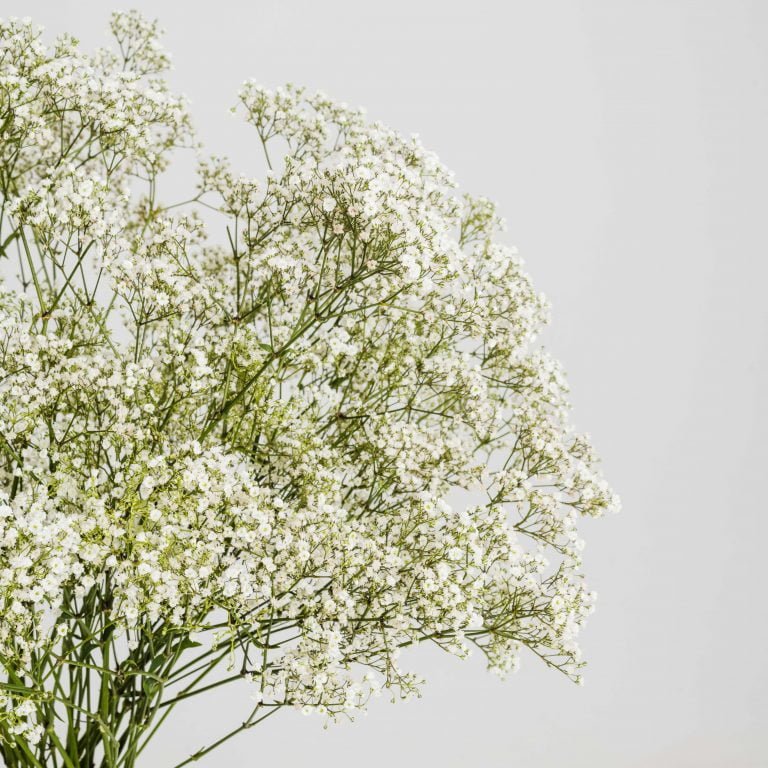
- gypsophila – a white gypsophila cloud turns pastel carnations into a light, romantic bouquet;
- lisianthus and chrysanthemums – similarly long-lasting flowers, so the bouquet ages evenly in the vase;
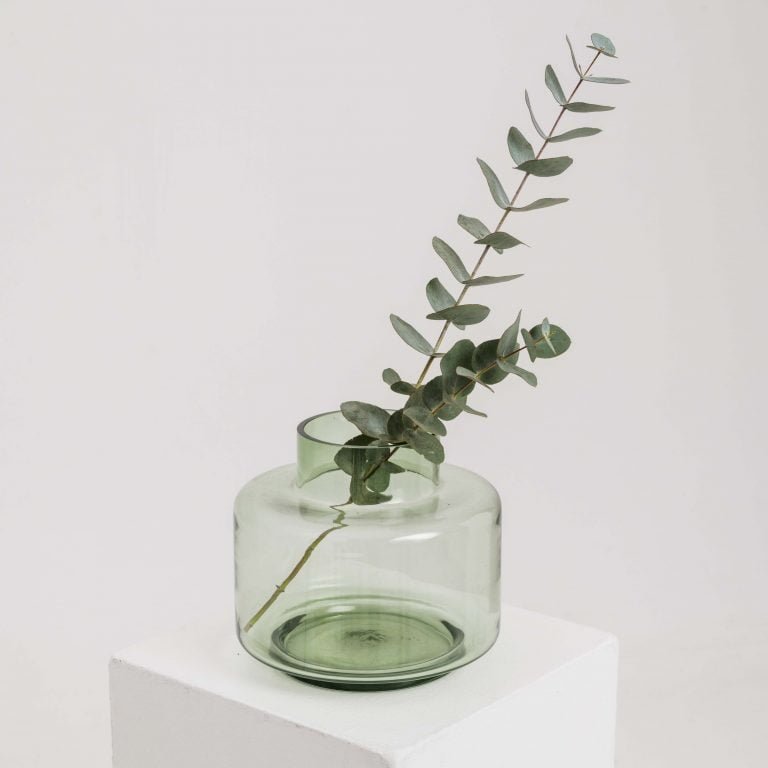
- eucalyptus and dried grasses – for autumnal, warm-toned arrangements.
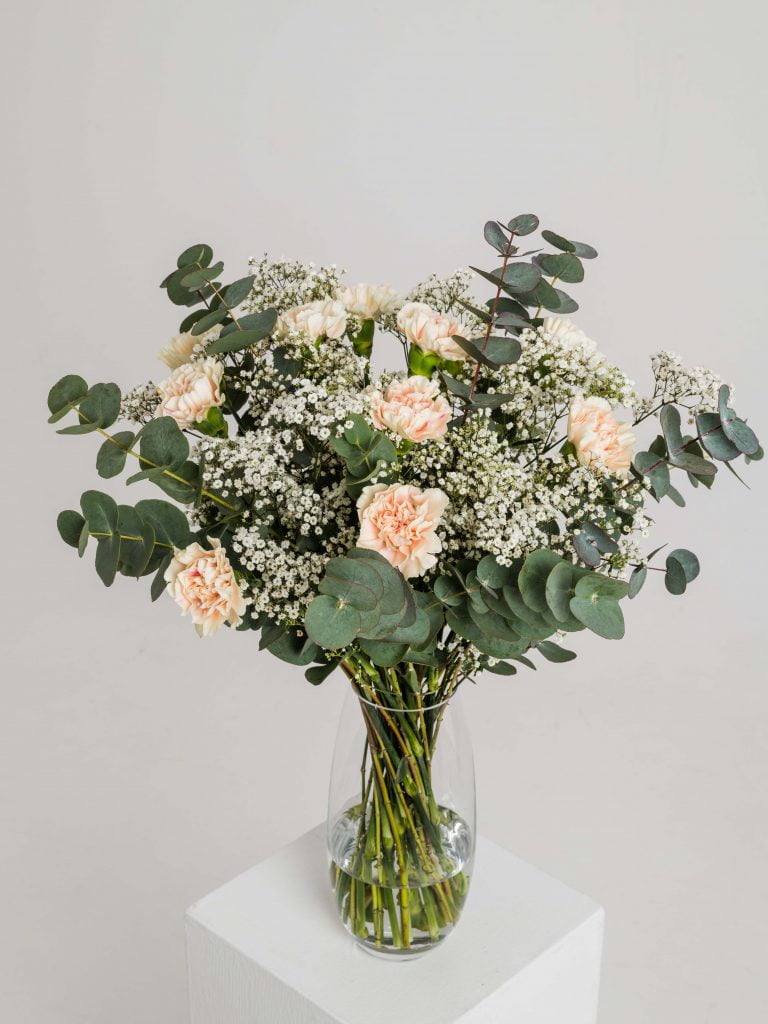

 Romantic breakfastA romantic bouquet in pink tones: carnations, lisianthus, chrysanthemums, limonium and eucalyptus – flowers that last a long time in a vase.From €35View the bouquet →
You will find more combinations among our bouquets with carnations – each one is made from the fresh flowers in our studio that day.


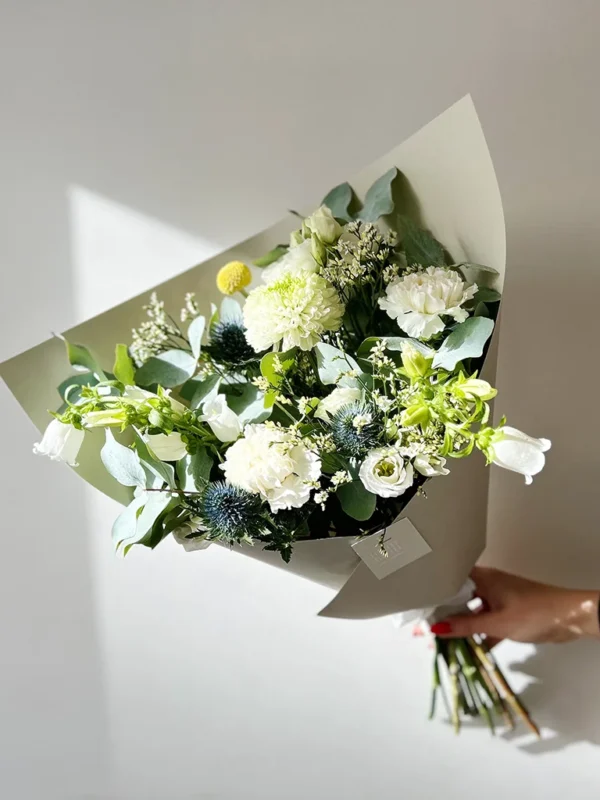
Are carnations a good choice for men
Yes – the carnation was long considered a “masculine” flower: understated, uncluttered and long-lasting. For a man we usually choose deep red, burgundy or white carnations with greenery, without sweet pastel combinations. More ideas under flowers for men.
Frequently asked questions about carnations
How long do carnations last in a vase?
Usually 10–14 days, and up to three weeks in a cool room if you change the water every two days and keep them away from fruit.
Do carnations have a scent?
Many carnations have a gentle, spicy scent, but modern cut varieties are less fragrant than garden pinks. That makes a carnation bouquet suitable for people sensitive to scents.
What do yellow carnations mean?
In the Victorian language of flowers – disappointment, but today yellow carnations are usually given as a symbol of joy and warmth.
What are carnations called in Lithuanian?
Gvazdikai; spray carnations are šakotieji or kekiniai gvazdikai. The Latin name is Dianthus caryophyllus.
Can you give an even number of carnations?
In Lithuania it is customary to give an odd number of flowers to the living, while even numbers are associated with funerals. In large bouquets with greenery the number no longer matters.