Tulips are among the first flowers of spring and one of the most popular gifts for International Women’s Day on 8 March. Thousands of varieties have been registered worldwide: from classic cup-shaped blooms to double ones that look like peonies.
In this guide: which tulip types you will find at florists, what they symbolise and how to care for tulips in a vase so they don’t droop and last as long as possible.
Where tulips come from
Wild tulips come from the mountains of Central Asia. In the 16th century they became a favourite of the Ottoman sultans, and by the end of the century tulips had reached the Netherlands. In the 17th century, “tulip mania” – often called the first speculative bubble – broke out there: rare bulbs are said to have cost as much as a house. Today the Netherlands grows most of the world’s tulips.
Tulip types
Tulips are divided into 15 groups by flower shape and flowering time. These are the ones you will meet most often in cut bouquets:
- Triumph tulips – classic cup-shaped blooms on sturdy stems. Most tulips at florists and in bouquets are Triumphs.
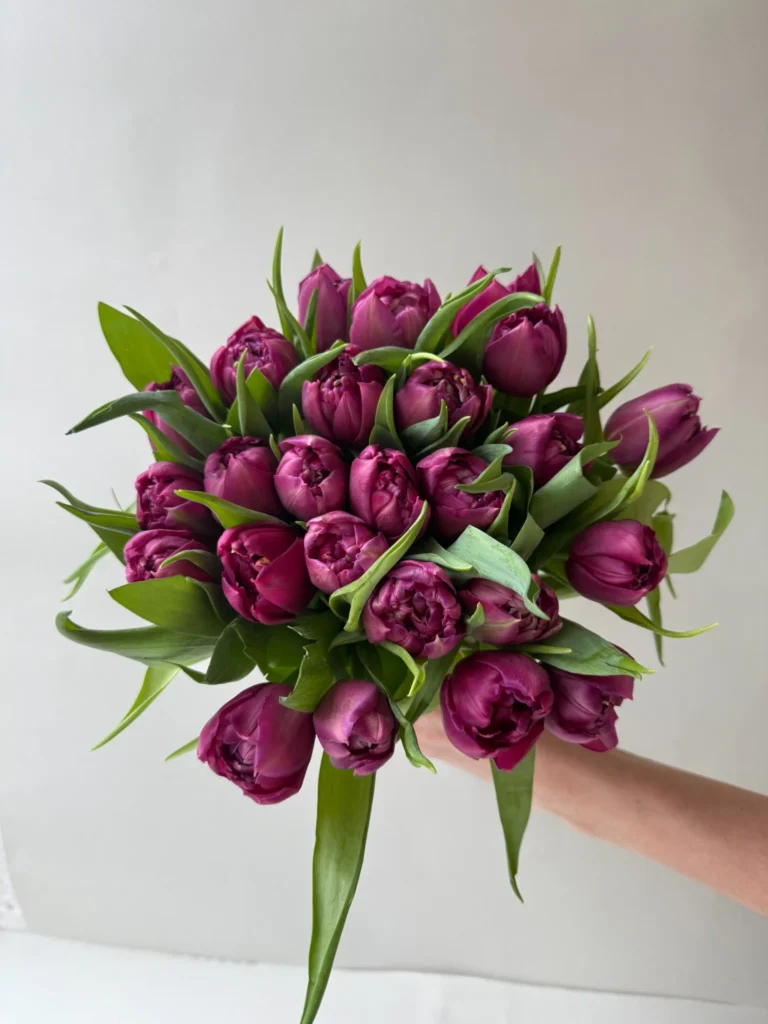
- Peony tulips (double late) – layered blooms that look like peonies. We explain how they differ from peony roses and true peonies in our peony guide.
- French tulips – single late tulips with long 50–70 cm stems and large blooms. Elegant in tall vases.
- Parrot tulips – wavy, cut, often two-coloured petals that look like parrot feathers.
- Fringed tulips – petal edges that look trimmed with fringe.
- Lily-flowered tulips – pointed, outward-curving petals that make the bloom look like a lily.
- Viridiflora tulips – green streaks on the petals.
- Darwin hybrids – very large blooms on tall stems.
What tulips symbolise
Tulips are associated with spring, renewal and sincere love. Colour adds further shades of meaning:
- red – love and passion;
- pink – tenderness and care;
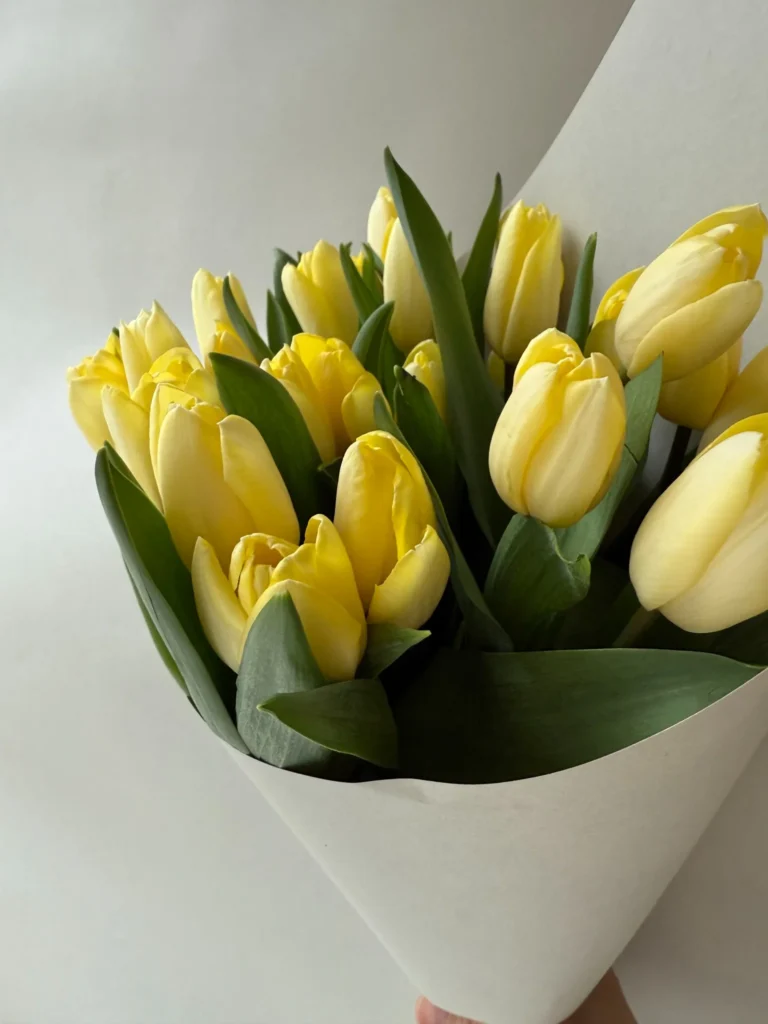
- yellow – joy and sunshine (in the old language of flowers, hopeless love);
- white – forgiveness and respect;
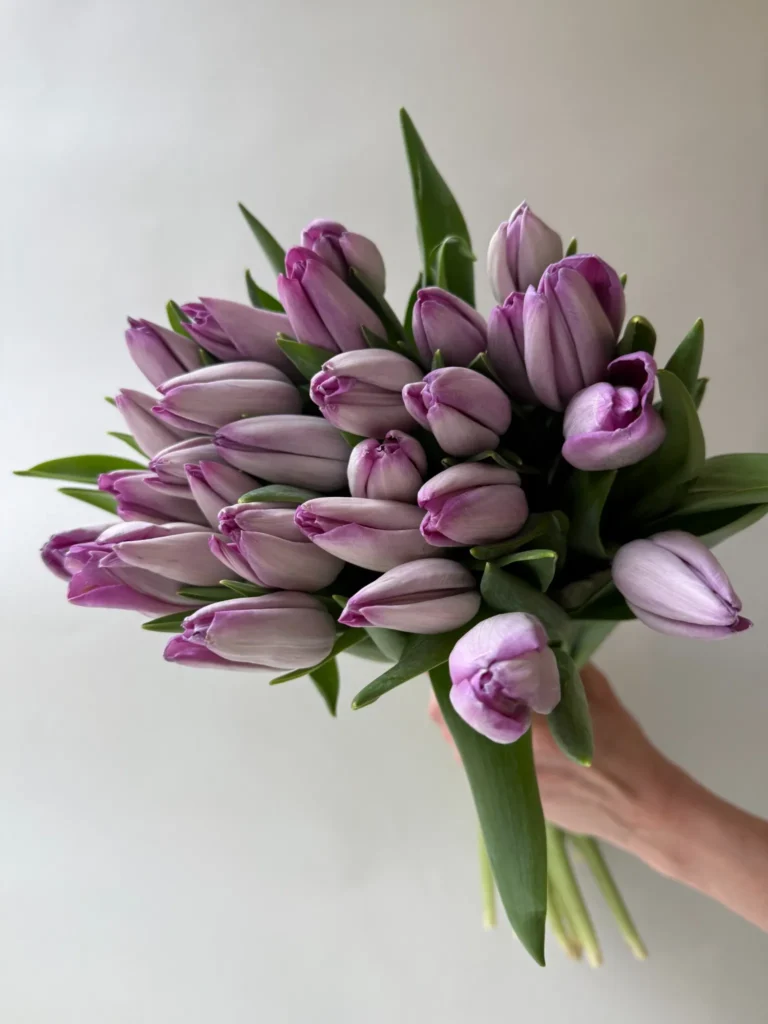
- purple – nobility and admiration.
How to choose tulips
- The buds should show colour but still be closed – such tulips will open in the vase and last longest.
- Stems and leaves should be firm and deep green, with no yellow or limp patches.
- Avoid fully open blooms if you are giving the bouquet the next day.
- In winter, protect tulips from the cold – wrap them in paper when carrying them outside.
How long tulips last in a vase
Well cared for, tulips last 5–7 days in a vase, and up to 10 days if bought in bud. Tulips last longest when the buds already show colour but are still closed.
How to care for tulips in a vase
- Unwrap and trim. Cut 1–2 cm off the stems at an angle with a sharp knife and remove any leaves that would sit in the water.
- Use cool water. Tulips like cold water – about a third of the vase’s height is enough.
- Choose a tall vase. Tulips keep growing in the vase, so a tall one supports them and stops them bending.
- Turn the vase every day. Tulips lean towards the light, so turning the vase keeps them straight.
- Change the water every 1–2 days and trim the stems a little each time.
- Keep them cool – away from radiators, direct sunlight and fruit: the ethylene fruit releases speeds up wilting.
- Don’t mix them with freshly cut daffodils. Daffodil sap harms tulips, so keep daffodils separately for 6–12 hours first and don’t recut them.
You will find general tips on making cut flowers last longer in How to make cut flowers last longer: 10 florists’ tips.
Why tulips droop and how to straighten them
Tulips droop for three reasons: they keep growing after being cut (the stems can grow a few centimetres in a few days), they turn towards the light, and they drop their heads when short of water.
To straighten droopy tulips, wrap the whole bouquet tightly in paper so the blooms are inside, recut the stems and stand them in cold water for 1–2 hours. The stems will take up water and firm up straight.
Folk tips – pricking the stem with a pin just below the bloom or dropping a copper coin in the vase – make no real difference. Cool water, flower food and a tall vase help most.
When is tulip season
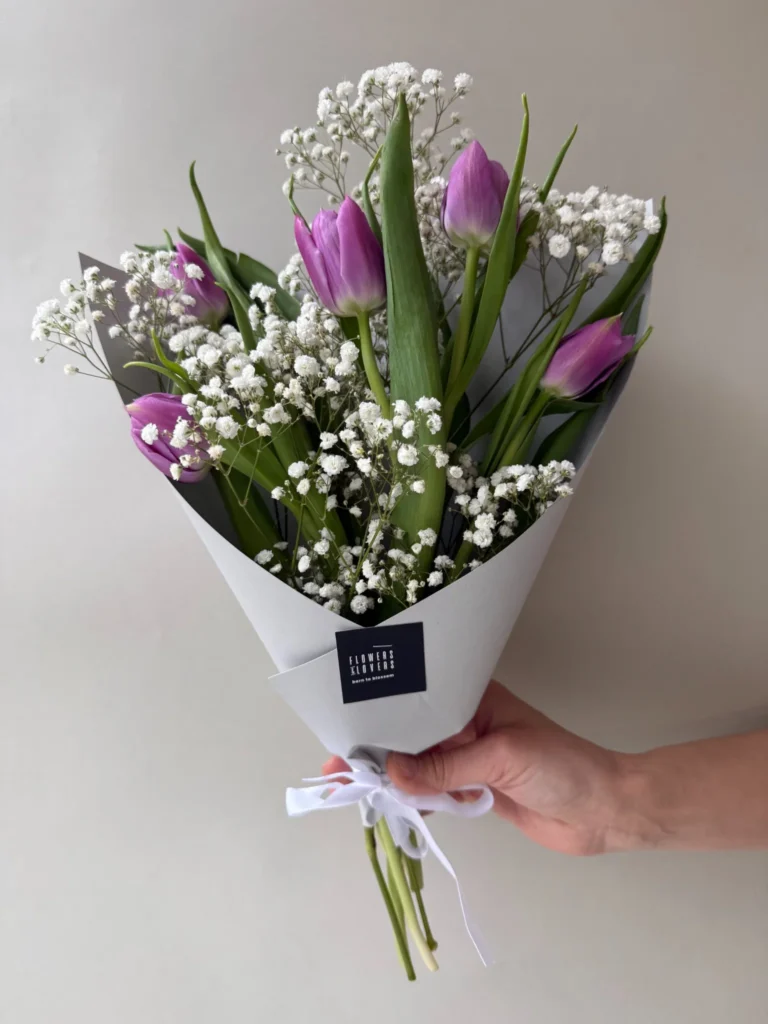
Greenhouse-grown cut tulips are sold from December to May, most of all in February and March, ahead of Valentine’s Day and International Women’s Day. Outdoors, tulips flower in Lithuania in April and May.
In season, you will find tulip bouquets in our tulips category, and other seasonal flowers among our spring bouquets.
Are tulips dangerous for pets
Tulips contain substances (tulipalins) that can cause drooling, vomiting and diarrhoea in cats and dogs. The bulbs contain the most, but keep cut tulips out of your pets’ reach too.
Frequently asked questions about tulips
How long do tulips last in a vase?
5–7 days, and up to 10 days if bought in bud and well cared for.
Why do tulips droop in a vase?
Because they keep growing after being cut, turn towards the light and drop their heads when short of water. A tall vase, cool water and turning the vase daily help.
How do I straighten droopy tulips?
Wrap the bouquet in paper, recut the stems and stand them in cold water for 1–2 hours.
How much water do tulips need?
About a third of the vase’s height of cold water; change it every 1–2 days.
How do peony tulips differ from regular tulips?
Peony tulips have many layers of petals, so the bloom is double and looks like a peony.
Can tulips go in the same vase as daffodils?
Only if the daffodils have stood separately for 6–12 hours first and their stems haven’t been recut – fresh daffodil sap harms tulips.