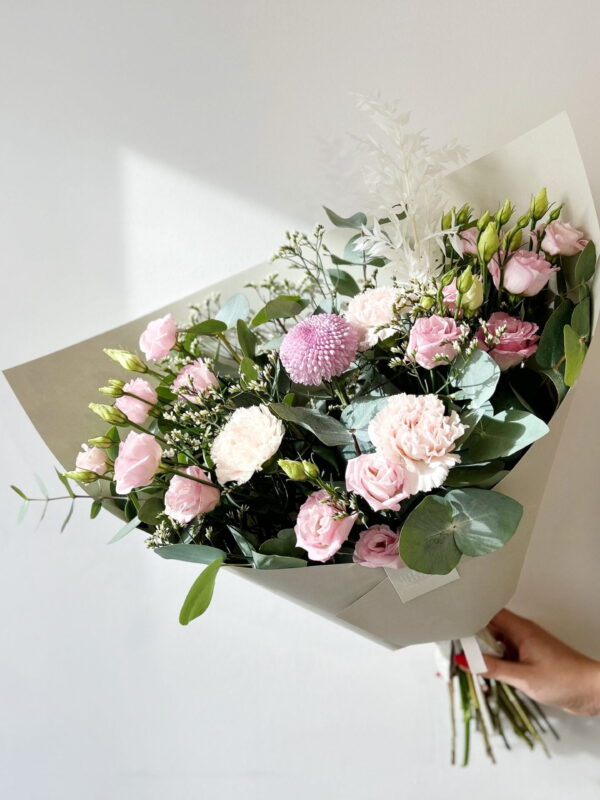
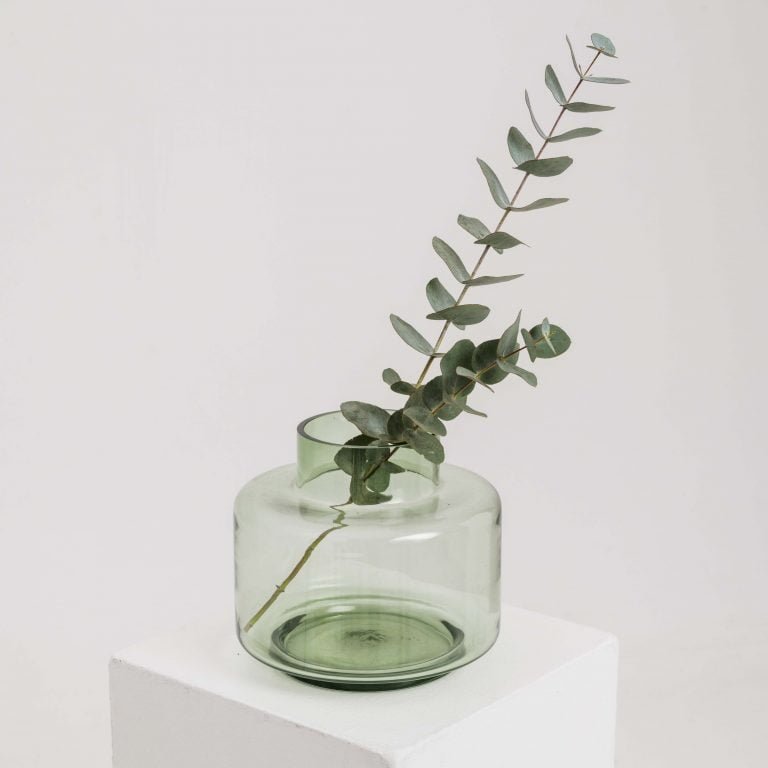
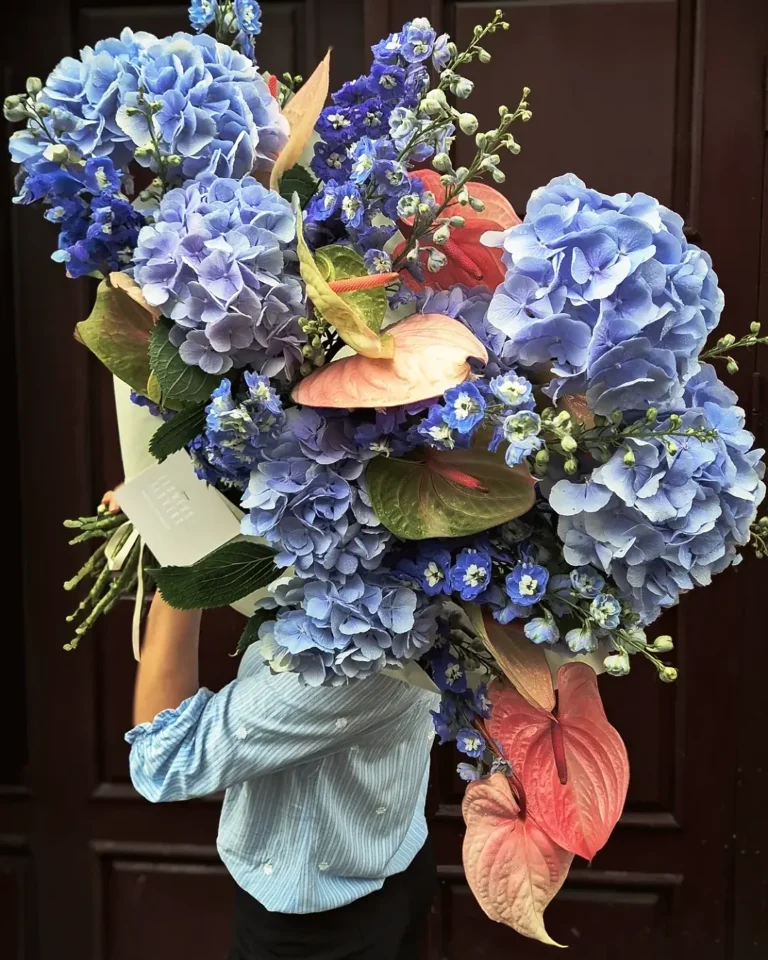
A good vase is half of a bouquet’s success. In a vase of the wrong size even a beautiful bouquet splays out, leans to the side or looks too small, while a vase that is too narrow keeps the stems from drinking. In this guide: how to match a vase to the shape and size of a bouquet, which material to choose and how to care for a vase so flowers last longer.
What size vase do you need
A simple florists’ rule: the vase should be about a third to half the height of the bouquet. Then the flowers rise above the rim and the stems have support.
- Height. Measure from the stem ends to the tops of the flowers: a 50 cm bouquet suits a vase 20–25 cm tall.
- Neck width. The stems should fit loosely – if you have to force them in, they break and drink less. The binding point of a hand-tied bouquet should sit comfortably in the neck.
- Capacity. Large bouquets, especially with hydrangeas or roses, need a lot of water, so choose a roomier vase.
Vase shape by bouquet
- A round, hand-tied bouquet suits a cylinder or a vase that widens slightly towards the top – it supports the bouquet’s shape.
- A tall, long-stemmed bouquet, for example roses or gladioli, needs a tall, narrow cylinder.
- A loose, wildflower-style bouquet – a lower vase with a wide neck that lets the stems spread freely.
- A single stem or a few flowers – a small bud vase with a narrow neck that holds the stem upright.
- Heavy flowers such as hydrangeas or peonies – a heavier, stable vase with a wide base so it does not tip over.
When a bouquet starts to fade, take it apart and put the remaining flowers into several smaller vases – they will look like a new arrangement.
Which vase material to choose
- Glass – versatile and easy to clean; in clear glass you can see when the water needs changing. Coloured or glossy glass adds warmth to an interior.
- Ceramic – heavy and stable, so it suits large bouquets, and matte ceramics look lovely with dried flowers. Before filling it with water, make sure it is glazed inside – otherwise it may leak.
- Metal – elegant, but some metals react with water and flower food, so it is better to place a glass container inside.
- Wood and woven baskets – suit dried flowers; fresh flowers need an inner container for water.


How to care for a vase so flowers last longer
A dirty vase is the most common reason a bouquet wilts quickly: bacteria left on the walls clog the stems.
- Before putting in a new bouquet, wash the vase with hot water and washing-up liquid.
- Clean a narrow neck with a bottle brush, or fill the vase with warm water and a spoonful of baking soda, close it and shake.
- Rinse the vase every time you change the water, every 2–3 days.
- Remove limescale from glass with vinegar or a citric acid solution.
More tips on caring for the flowers themselves in our flower care guide.
A short history of vases
The first vessels we would call vases today were made not for flowers but for storing grain, oil and wine. The potter’s wheel appeared in Mesopotamia about 5,500 years ago, and vessels became more regular in shape.
The ancient Greeks turned vases into works of art: they decorated them with mythological scenes and named them by purpose – amphorae were for oil and wine, hydriai for water, alabastra for perfume and kraters for mixing wine with water. Winners of the Panathenaic Games in Athens received amphorae filled with olive oil as prizes. Today Greek vases are sometimes the only surviving record of certain cultural scenes.
In China and Japan flower arrangements in vases, such as ikebana, have centuries-old traditions, while in Europe bouquets in vases became popular in the 16th–17th centuries, immortalised by Dutch still-life painters.
A vase with your bouquet
When giving flowers, think about whether the recipient will have a suitable vase. If you order a vase with the bouquet, the flowers arrive already in water and the gift is ready straight away. We deliver bouquets and vases in Vilnius and across Lithuania.
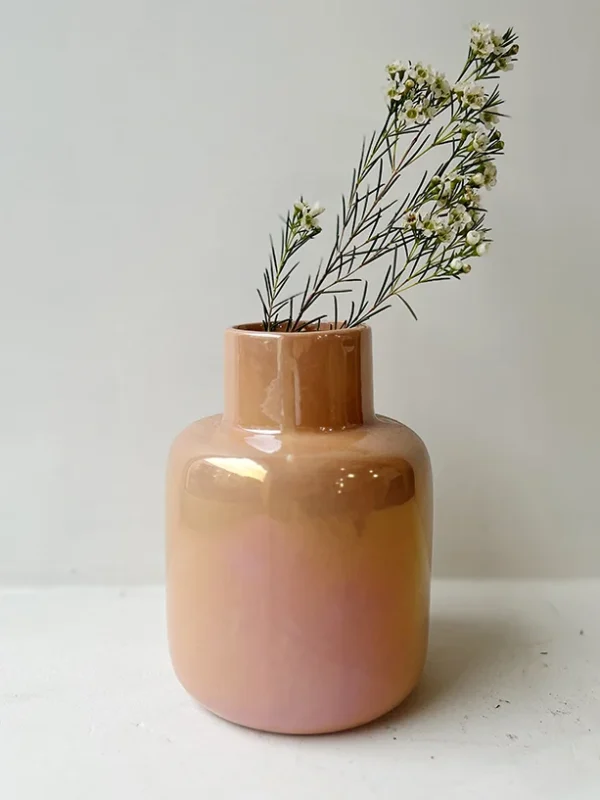 VaseA glossy caramel-toned glass vase with a rounded shape and a narrower neck – it suits our S and M size bouquets.€30View the bouquet →
Frequently asked questions about vases
How tall should a vase be for a bouquet?
About a third to half the height of the bouquet: a 50 cm bouquet suits a vase 20–25 cm tall.
Which vase suits roses?
Long-stemmed roses need a tall cylinder vase, while a round rose bouquet suits a medium-height vase that widens slightly at the top.
How do you clean a vase with a narrow neck?
Fill it with warm water and a spoonful of baking soda or a handful of uncooked rice, shake well and rinse thoroughly.
How much water should go in a vase?
For most flowers, fill it halfway. Thirsty roses and hydrangeas need more, while gerberas need only a few centimetres.