An Advent wreath is a green wreath with four candles that count down the four weeks to Christmas. On each Sunday of Advent one more candle is lit, so there is more and more light at home. In 2026 Advent begins on 29 November, and the fourth and final candle is lit on 20 December.
In this guide: what the Advent wreath and its candles symbolise, in what order to light them, how to make a wreath at home and how it differs from a Christmas door wreath.
Where the Advent wreath comes from
The Advent wreath tradition was started in 1839 by the German pastor Johann Hinrich Wichern. At a children’s home in Hamburg he fixed 24 candles to a wooden cartwheel – small ones for each day and larger ones for Sundays – so the children could see how long was left until Christmas. Later the wheel was decorated with fir branches and the daily candles were reduced to four Sunday candles. From Germany the tradition spread across Europe and reached Lithuania through both churches and homes.
What the Advent wreath symbolises
- The circle has no beginning and no end, so it symbolises eternity and never-ending love.
- Evergreens – fir, spruce, box – stand for life that endures even in winter.
- The four candles stand for the four weeks before Christmas, and the light that grows each week for the approaching celebration and hope.
The four Advent candles: meaning and colours
In the Catholic tradition each candle has its own name and meaning. The names vary slightly from country to country, but most often they are:
- The Prophets’ candle – hope. Purple.
- The Bethlehem candle – faith and peace. Purple.
- The Shepherds’ candle – joy. Pink: the third Sunday of Advent is called Gaudete (Joy) Sunday.
- The Angels’ candle – love. Purple.
In the liturgy, purple stands for waiting and reflection. At home people often choose white, red or natural beeswax candles too – the ritual matters more than the colour. Some families place a fifth, white candle in the centre of the wreath and light it on Christmas Eve.
When to light the Advent candles in 2026
| Sunday | Date | Candles lit |
|---|---|---|
| 1st Sunday of Advent | 29 November | 1 |
| 2nd Sunday of Advent | 6 December | 2 |
| 3rd Sunday of Advent (Gaudete) | 13 December | 3 (including the pink one) |
| 4th Sunday of Advent | 20 December | 4 |
The candles are usually lit at Sunday lunch or dinner, and on weekday evenings the same candles that have already been lit are lit again.
How to make an Advent wreath
A fresh wreath smells of the forest and looks the cosiest. You will need:
- a base – a straw, foam or willow ring about 25–35 cm across;
- branches – noble fir (nobilis), fir, thuja, box or eucalyptus;
- florist’s wire and secateurs;
- four candles and metal candle holders or picks to fix them;
- decorations – pine cones, dried orange slices, cinnamon sticks, ribbons.
- Cut the branches into 10–15 cm pieces and gather them into small bunches of 3–4 sprigs.
- Wire the bunches to the ring in one direction, overlapping each one with the next so the wire is hidden.
- Push four candle holders evenly into the ring, a quarter apart, and insert the candles.
- Decorate with cones, fruit or ribbons – these are best fixed with wire or hot glue.
- Place the wreath on a heat-resistant tray.
Which branches will last all through Advent
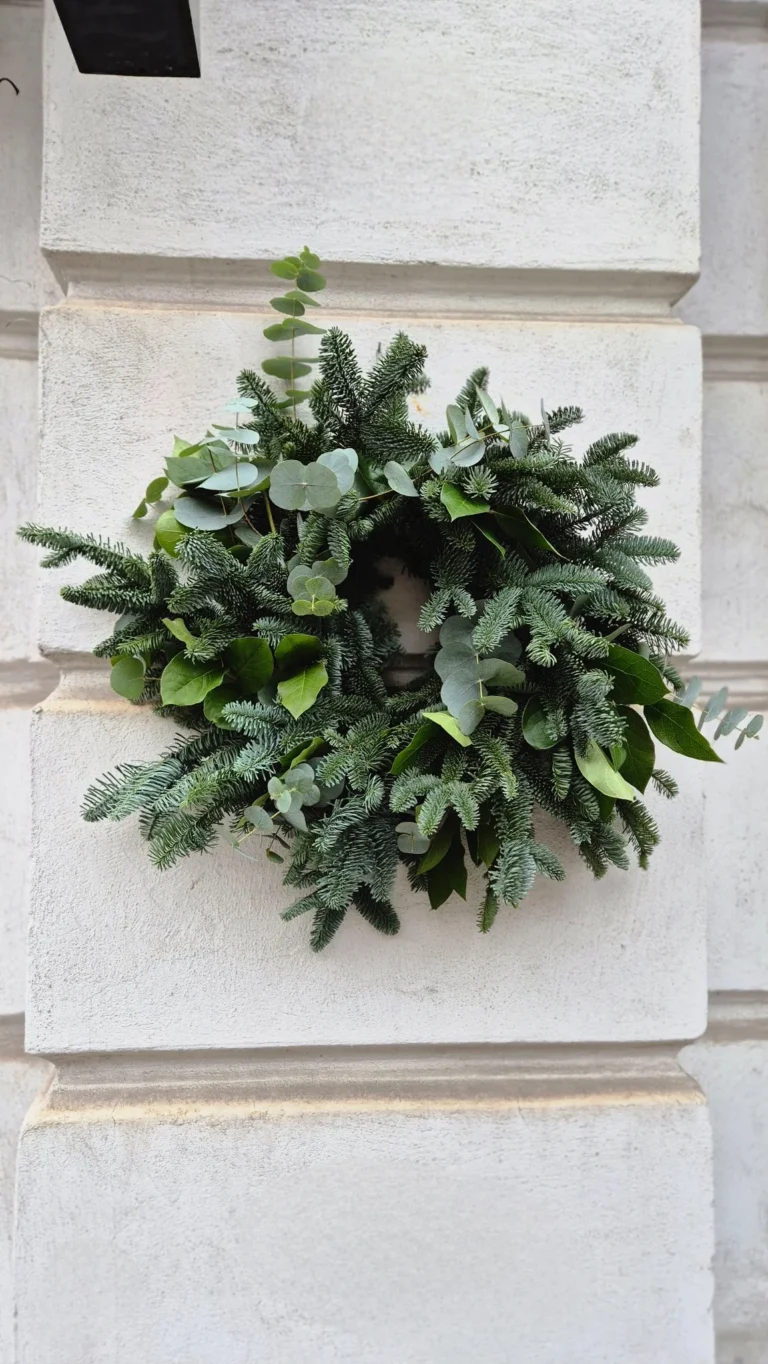
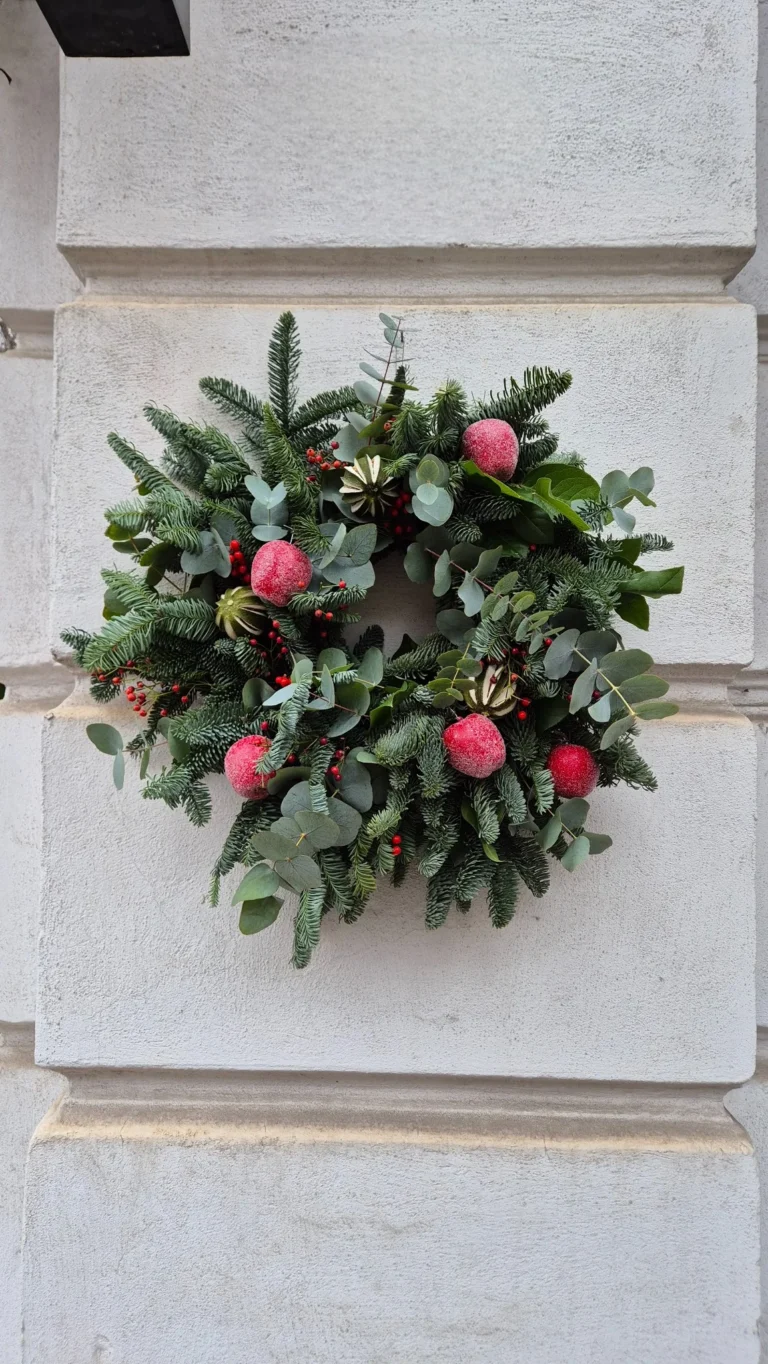
Advent lasts almost four weeks, so choose branches that hold their needles. Noble fir (nobilis) and fir last longest – in a cool room they stay beautiful for 3–5 weeks. Ordinary spruce drops its needles faster in a warm room. Eucalyptus adds a silvery tone and slowly dries without losing its shape. To keep the wreath fresh for longer, mist it with water every few days and keep it away from radiators.
Safety: candles and dry branches
Over four weeks the branches dry out and become highly flammable. So:
- never leave burning candles unattended, and do not light them once the wreath is dry and shedding;
- choose candles at least 10 cm taller than the branches and replace them in good time;
- keep the wreath away from curtains, and take extra care around children and pets.
A safer alternative is four candles in glass or concrete containers set on a tray and surrounded by greenery, or LED candles. More tips in our post on burning candles.

Advent wreath or Christmas wreath: the difference
An Advent wreath lies flat on the table, has four candles and is used during the season of waiting – from the first Sunday of Advent until Christmas Eve. A Christmas wreath is usually hung on a door or wall, has no candles and decorates the home throughout the holidays until Epiphany.
In December our studio makes Christmas wreaths from fir, eucalyptus and seasonal decorations, as well as festive bouquets for the Christmas table. We deliver in Vilnius and across Lithuania.

Frequently asked questions about the Advent wreath
When do you light the first Advent candle in 2026?
On 29 November, the first Sunday of Advent. The other candles are lit on 6, 13 and 20 December.
What colour should Advent candles be?
In the Catholic tradition, three purple and one pink for the third Sunday. At home white, red or natural beeswax candles are also common.
What does the Advent wreath symbolise?
The circle stands for eternity, the evergreens for life, and the four candles for the four weeks before Christmas and the growing light.
How long does a fresh Advent wreath last?
3–5 weeks in a cool room, especially if it is made of noble fir or fir and misted with water now and then.
How is an Advent wreath different from a Christmas wreath?
An Advent wreath lies on the table with four candles and is used during Advent; a Christmas wreath hangs on a door or wall and has no candles.
Can you leave the candles burning in the wreath unattended?
No. Within a few weeks the branches dry out and can catch fire in seconds, so always put the candles out when you leave the room.