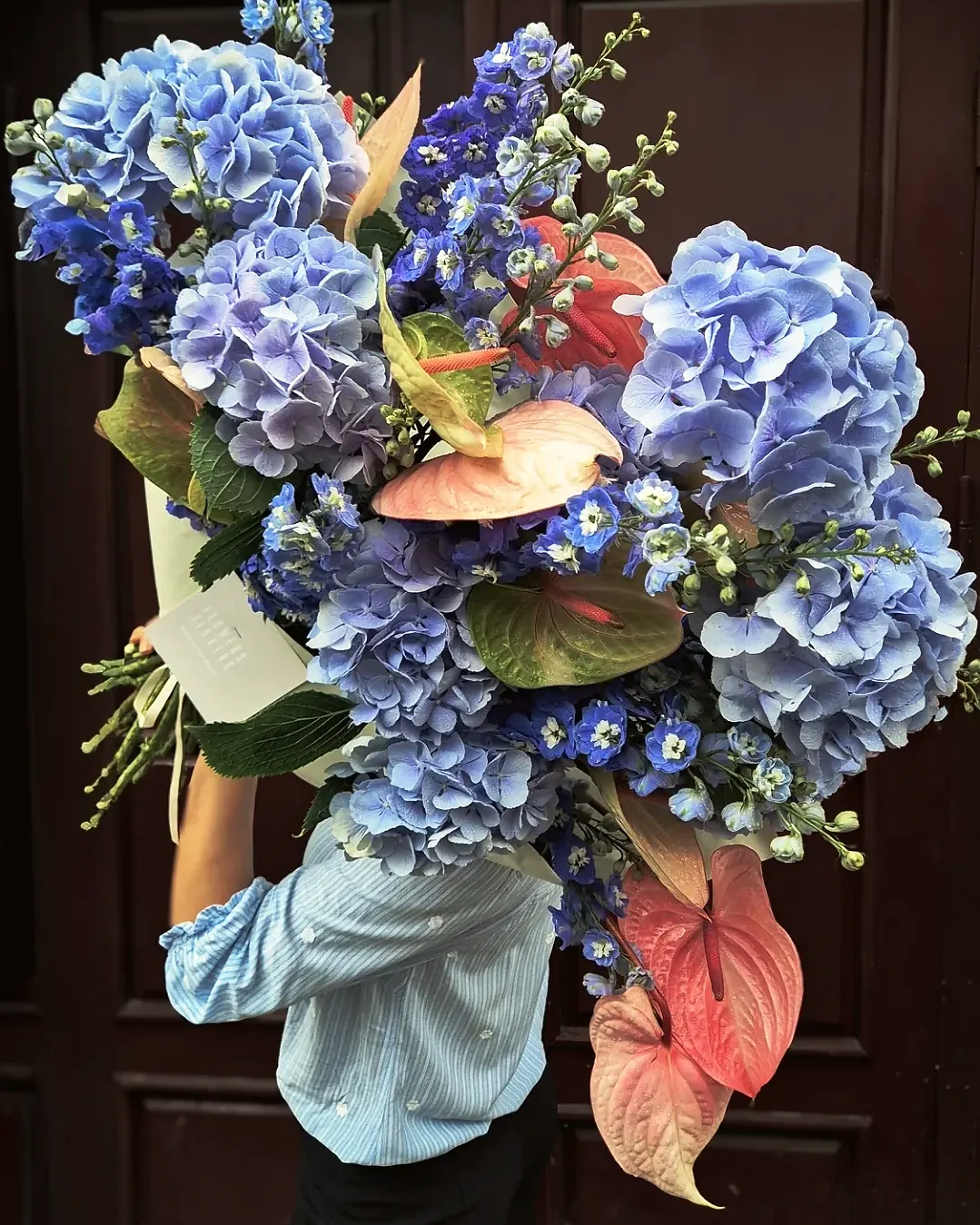
Hydrangeas (lat. Hydrangea) have huge, cloud-like flower heads. A single hydrangea stem can fill half a bouquet, which is why florists love them. But cut hydrangeas have a temperament of their own: they drink a lot and can wilt within a few hours without water. The good news is that they can usually be revived.
In this guide: how to put hydrangeas in water so they last longer, why they wilt and how to revive them, and which types and colours there are.
How to put hydrangeas in water
- Cut the stems at an angle, 3–5 cm, with a sharp knife. Florists also split the woody stem end 2–3 cm lengthwise to increase the surface that takes up water.
- Remove the lower leaves – hydrangea leaves lose a lot of moisture, so keep only a few at the top.
- Place in a tall vase filled at least halfway with cool water, and add flower food.
- Change the water every day or two and trim the stems each time.
- Keep them cool and out of the sun – in a warm room hydrangeas drink even more and wilt faster.
- Mist the flower heads once a day – hydrangeas absorb moisture through their flowers as well.
Well cared for, cut hydrangeas last 5–10 days in a vase.
Why hydrangeas wilt
Hydrangea stems are woody and take up water with difficulty, while the huge flower heads lose a great deal of moisture. The most common reasons for wilting are:
- air in the stem – if the hydrangea was out of water for a while, air got into the stem and it stopped drinking;
- too little water – hydrangeas drink a lot, so the vase runs dry sooner than you expect;
- heat and sun – by a radiator or window the flower heads lose more than the stem can take up;
- dirty water – bacteria clog the stem.
How to revive wilted hydrangeas
- Holding the stem under water, cut off 3–5 cm.
- Submerge the whole flower head with the stem in a bath or large bowl of cool water for 30–60 minutes. Very wilted heads can be left for a few hours.
- Take it out, gently shake off the water and put the hydrangea in a vase with fresh, cool water.
- If that did not help, dip the stem end in just-boiled water for 30 seconds, protecting the flowers from the steam, and move it straight into cool water.
A hydrangea usually recovers within a few hours. If the flower head stays limp even after a bath, it has most likely finished flowering – then all that is left is to dry it. More general tips in our flower care guide.
How to dry hydrangeas
Hydrangeas make excellent dried flowers. Heads that have already started to dry naturally and feel papery dry best. Leave them in a vase with a few centimetres of water until it evaporates, or hang them upside down in a dry, dark place. Dried hydrangeas keep their shape, and the colour turns softer, almost vintage.
Hydrangea types and colours
The hydrangea genus has several dozen species from East Asia and the Americas. These matter most for bouquets and Lithuanian gardens:
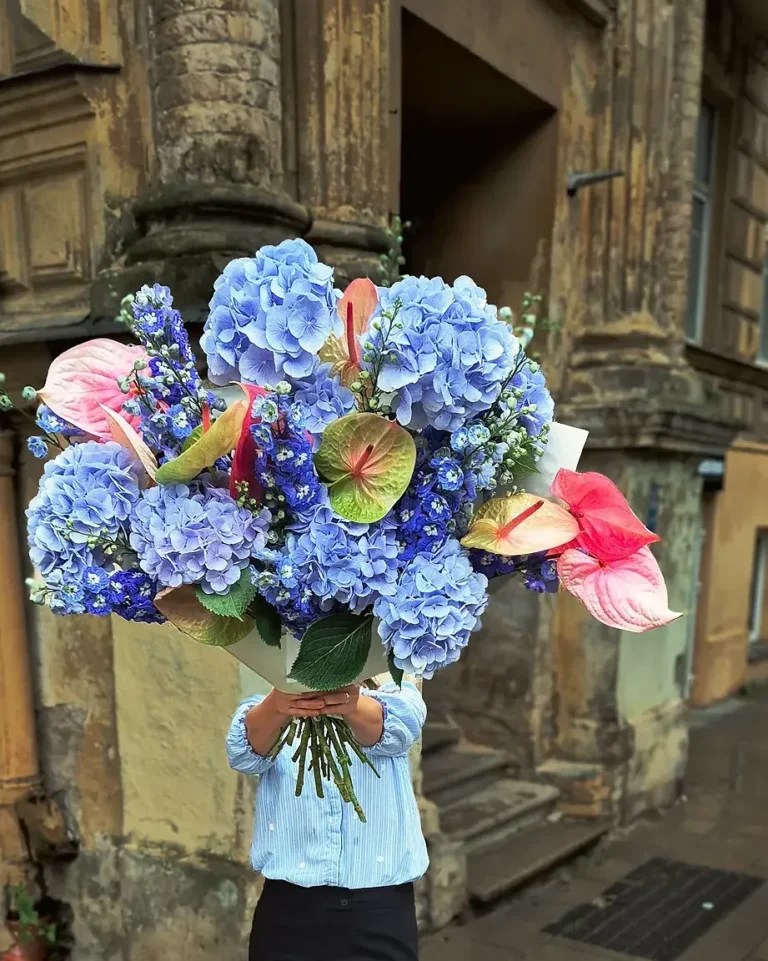
- Bigleaf hydrangea (Hydrangea macrophylla) – large, ball-shaped blue, pink or white heads. This is the one most often cut for bouquets; in Lithuania it is grown with winter protection or in a pot.
- Panicle hydrangea (Hydrangea paniculata) – cone-shaped heads that change colour as they bloom: from greenish to white, then blush or raspberry. One of the hardiest for Lithuanian gardens.
- Smooth hydrangea (Hydrangea arborescens) – large white balls, such as the variety ‘Annabelle’. It overwinters well.
- Climbing hydrangea (Hydrangea petiolaris) – a climber that covers walls and pergolas.
The most fascinating feature of bigleaf hydrangeas is that their colour depends on the soil. In acidic soil, where the plant can take up aluminium, the flowers are blue; in alkaline soil they are pink. White varieties do not change colour.
Hydrangeas in the garden: care in brief
Hydrangeas like moist, humus-rich, slightly acidic soil and partial shade. Water them generously, especially in hot weather, and feed them in spring and when the buds appear. Special hydrangea fertilisers are used to keep bigleaf hydrangeas blue.
Prune panicle and smooth hydrangeas in early spring – they flower on the current year’s shoots. Do not prune bigleaf hydrangeas hard, as they form their flower buds on last year’s shoots.
What hydrangeas symbolise
Hydrangeas symbolise gratitude and heartfelt feelings. In Japan they are associated with apology: according to legend, an emperor gave hydrangeas to the family of the woman he loved to apologise for neglecting her. Blue hydrangeas are usually associated with calm, pink ones with romance and white ones with purity.
Hydrangea bouquets
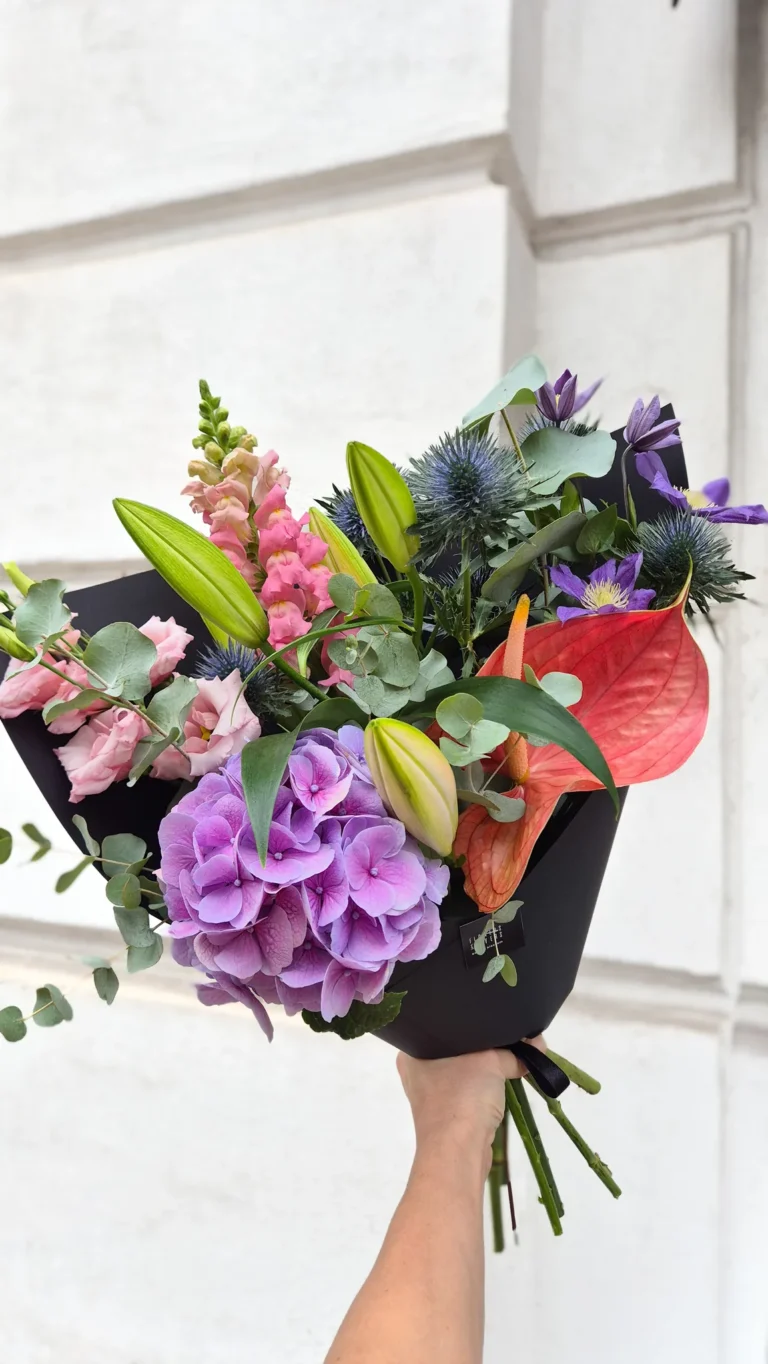
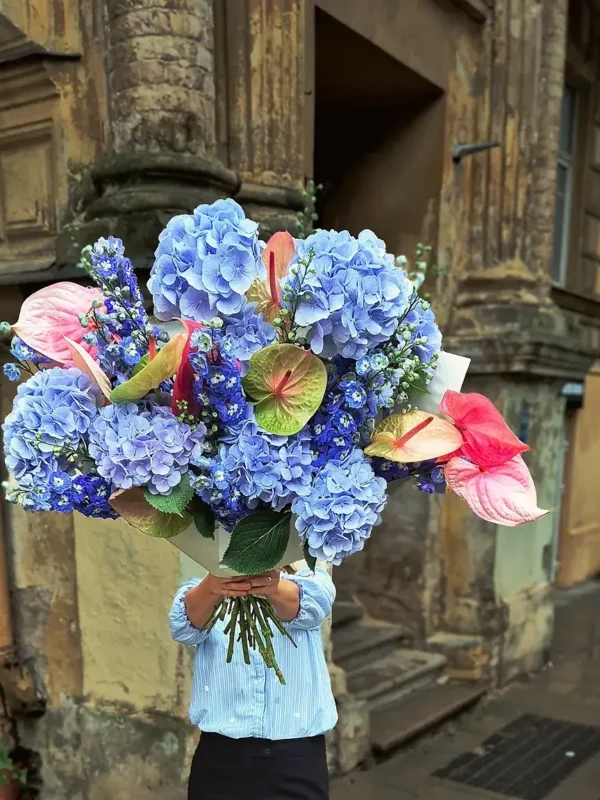
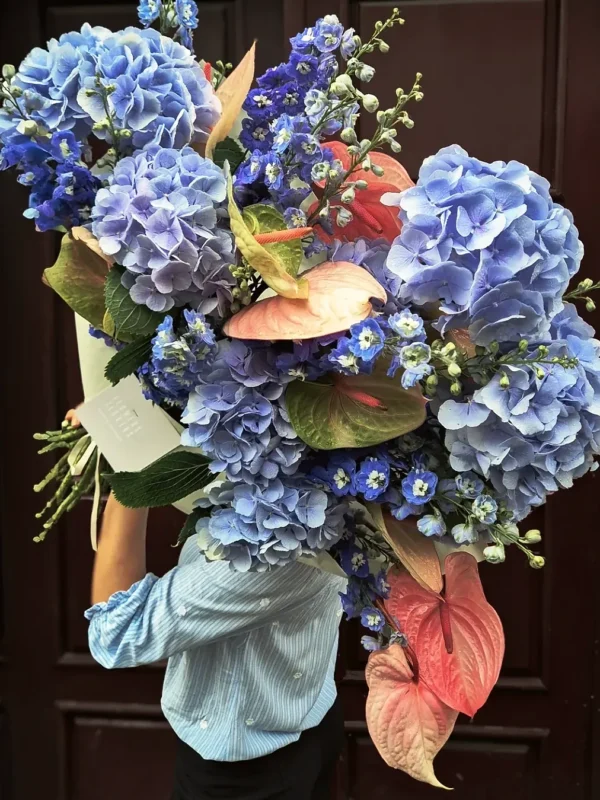
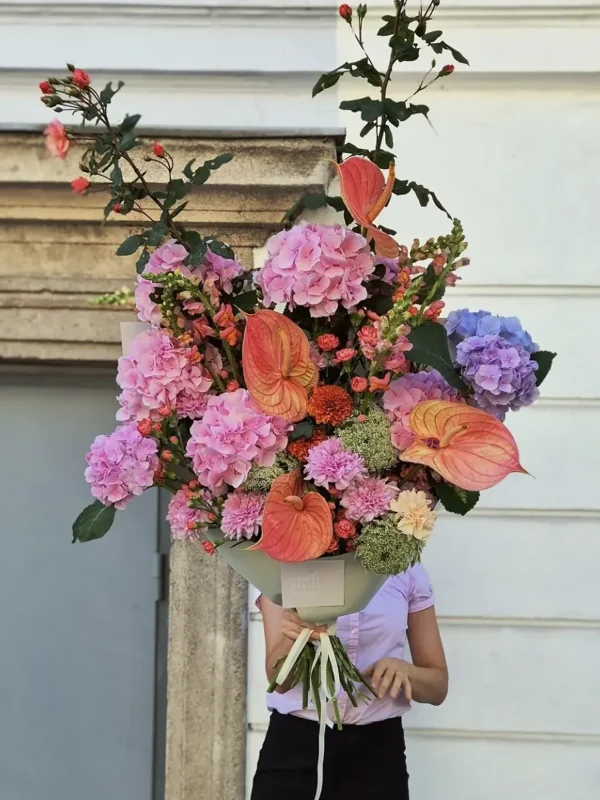
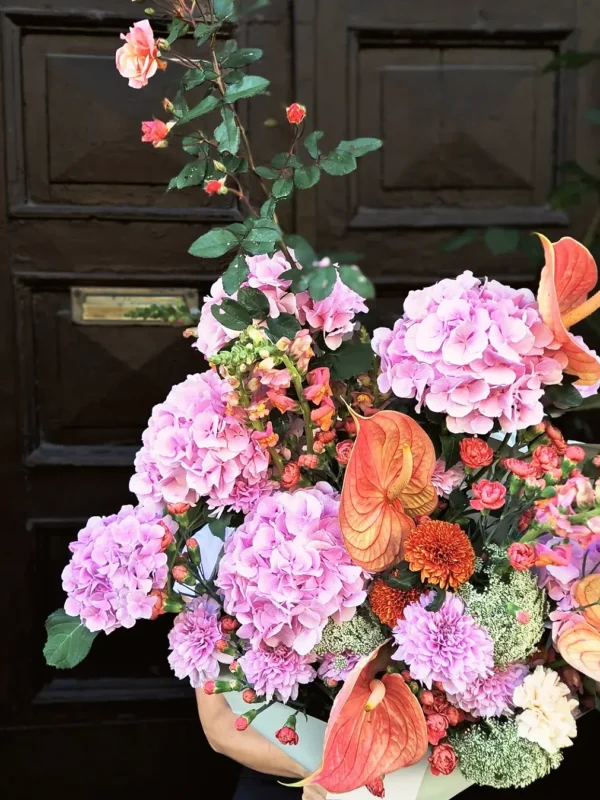
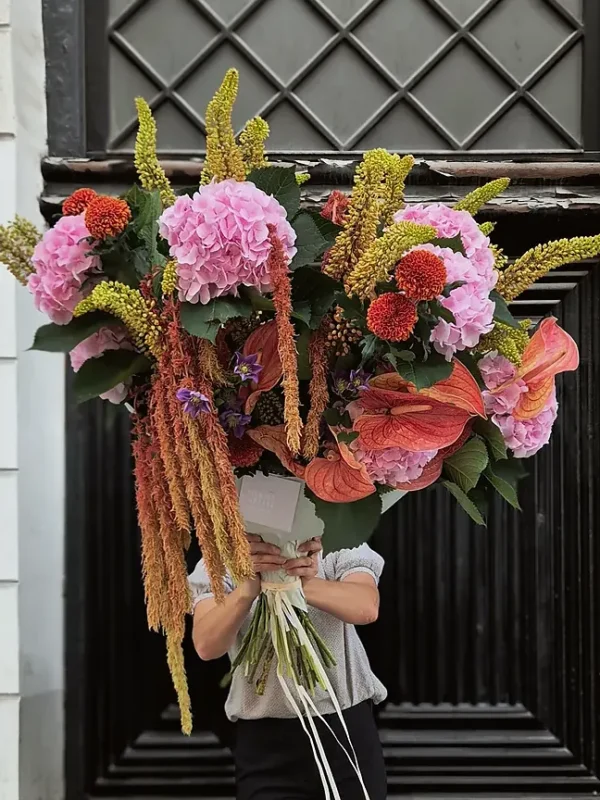
Hydrangeas are one of our florists’ favourite flowers: a single stem gives a bouquet volume, and combined with anthuriums, roses or lilies they make rich, seasonal compositions. You will find them all under hydrangea bouquets; we deliver in Vilnius and across Lithuania.
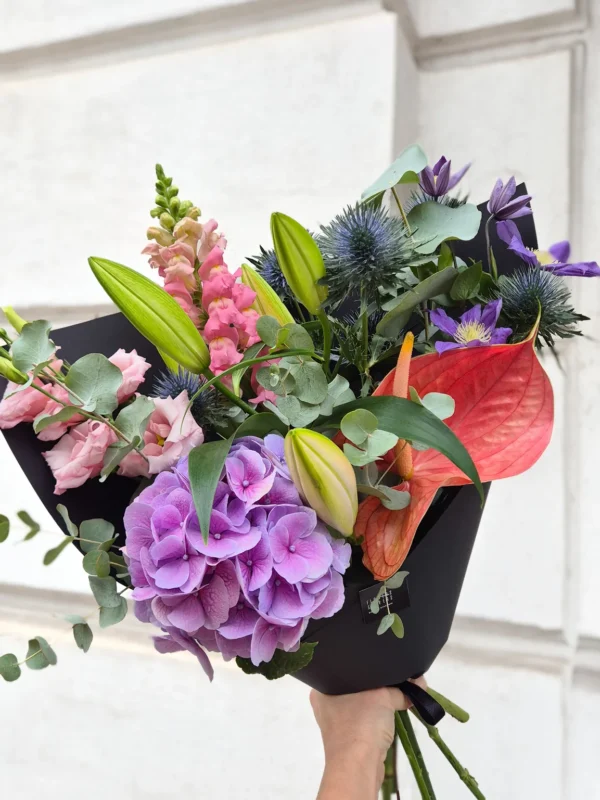 Evening GardenA purple hydrangea, red anthurium and pink lily – a rich evening bouquet with autumn flowers.From €35View the bouquet →
Frequently asked questions about hydrangeas
Why do cut hydrangeas wilt?
They drink and lose a lot of water, so they wilt when air gets into the stem, the vase runs dry or the bouquet stands somewhere warm. They can usually be revived.
How do you revive a wilted hydrangea?
Cut the stem end under water, submerge the whole flower head in cool water for 30–60 minutes, then put it in a vase with fresh water.
How long do hydrangeas last in a vase?
5–10 days if you change the water every day or two and keep the bouquet cool.
Should you mist hydrangeas?
Yes. Hydrangeas also absorb moisture through their flower heads, so it is worth misting them with water once a day.
Why are hydrangeas blue or pink?
The colour of bigleaf hydrangeas depends on soil acidity: in acidic soil the flowers are blue, in alkaline soil pink.
What are hydrangeas called in Lithuanian?
Hortenzijos. The Latin name is Hydrangea.